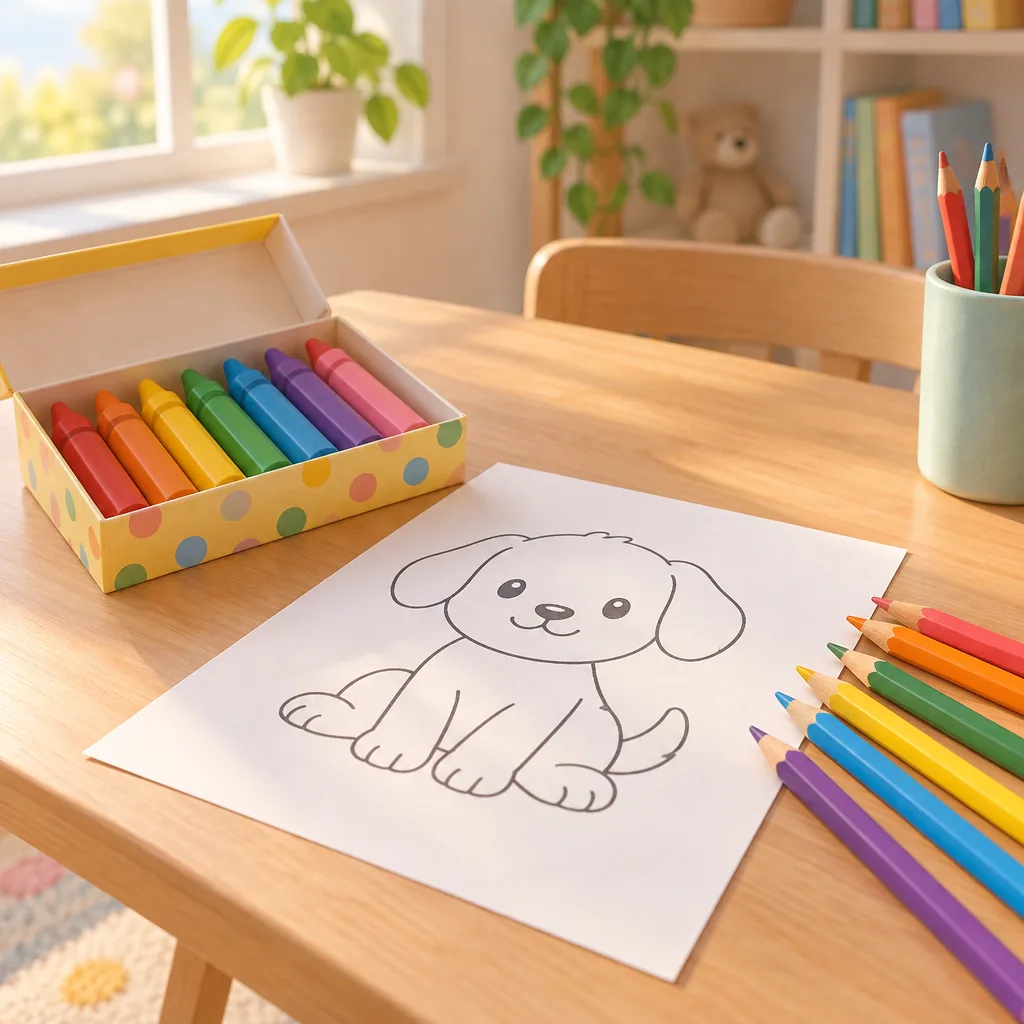
Fish Coloring Page (Preschool)
A simple Fish coloring page with thick outlines and friendly details — perfect for preschool hands.
This printable is a friendly fish coloring page for preschool-age children. The outlines are extra thick, the shapes inside are large and simple, and there are no tiny details to frustrate small hands. The whole page invites a young child to sit down, pick up a crayon, and just color.
What's on this printable
A single Fish illustration filling most of the page with thick black outlines, simple internal shapes, and a friendly facial expression where appropriate. There is plenty of open white space, and the page prints cleanly in black-and-white on a standard letter printer. The page is designed to print cleanly on a single sheet of standard letter or A4 paper, with clear margins for binding or hole-punching, and uses thick black outlines that hold up well even on draft-quality classroom printers.
Skill focus and developmental fit
Coloring at this age builds three things at once: hand strength, color awareness, and pencil control. The act of staying inside a thick outline trains the same visual-motor pathways the child will need for letter formation a year or two later. This printable is best suited for ages 3 to 8 — old enough to engage independently with the task, young enough that the skill being practiced is still actively developing. If a child finishes this page in under three minutes with no errors, it is likely time to move up to a more challenging variation; if they cannot complete it without help, drop down to a simpler page in the same category and try again in a week.
How to use this page at home or in the classroom
Hand the child the page with a small box of chunky crayons. Resist the urge to direct the colors. The point of the activity is independent decision-making and quiet engagement, not accuracy. Keep the session short — five to ten minutes of focused practice at this age beats a long, distracted session every time. Print one page per child, gather the supplies before you start (pencils, crayons, scissors, glue if needed), and clear the table of distractions.
Pairing ideas and extension activities
Cut out the finished coloring page and tape it onto a paper bag for an instant puppet. Or laminate it for a placemat. Or hang it on the fridge — sometimes that is the whole reward a four-year-old needs. Save the finished page in a take-home folder so families can see the week's work, and rotate the same skill into a different format the following week to reinforce learning without boring the child. Display a few finished pages on a bulletin board or fridge to give the child the visible signal that this work matters.
Why this matters in early childhood
Activities like this one look simple from the outside, but they are doing real cognitive and motor work under the hood. Small, focused practice tasks — done daily, in short bursts, with a friendly adult nearby — are the single most effective way to build the foundational skills that early elementary success rests on. Use this printable as one small piece of that bigger picture, not as the whole picture, and pair it with conversation, read-alouds, and play whenever possible.
How to use this worksheet
- Offer a small set of crayons (six is plenty).
- Sit nearby but do not direct the coloring.
- Hang the finished page somewhere visible.
- Save a few in a binder to look back on.
Skills practiced
- Crayon control
- Color recognition
- Hand strength
- Independent task completion
Tips for parents and teachers
The 'right way' to color is whatever way the child enjoys. Forcing strokes or insisting on staying in the lines can backfire — let preschool coloring stay playful.